Gutenbergthe movable type
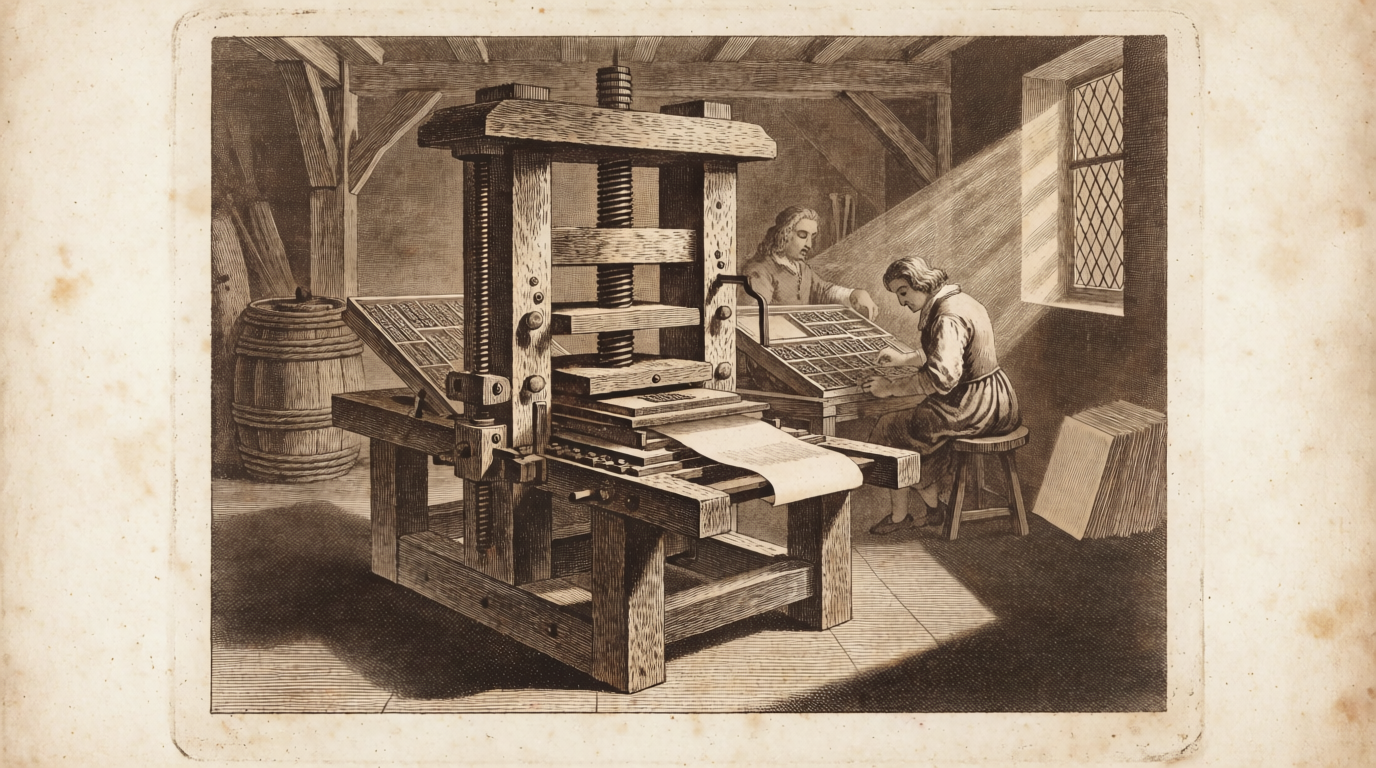
The common press — oak frame, wooden spindle, and the slow squeeze of a platen — by which a single page became ten thousand.
On the three slots
The plate above is set in three openings, and we were asked why. We went to the sources. The wooden common press has no three slots. It has upward of four hundred separately named members — cheeks, cap, winter, till, hose, coffin, rounce, and the sheep’s foot that draws the nails from the inking balls. Neither Moxon, describing the press in 1683, nor the Encyclopédie plate of 1767 counts its parts out in threes.
And yet the machine does keep dividing into three, and the men who rebuild it now say so plainly: its construction “broke down naturally into three sub-structures” — the frame that stands, the carriage that slides, and the screw that presses. Moxon had found the three elsewhere, and closer in. The spindle’s thread, he writes, is “a screw of three Worm”; the tympan frame is “three sides Wood, and one Iron.”
Three is not a slot cut in this press. It is the grain of it.
So we have let the three openings mean the three members. They are not ornament arranged around a picture; they are the press taken apart and set back in order — frame, carriage, screw.
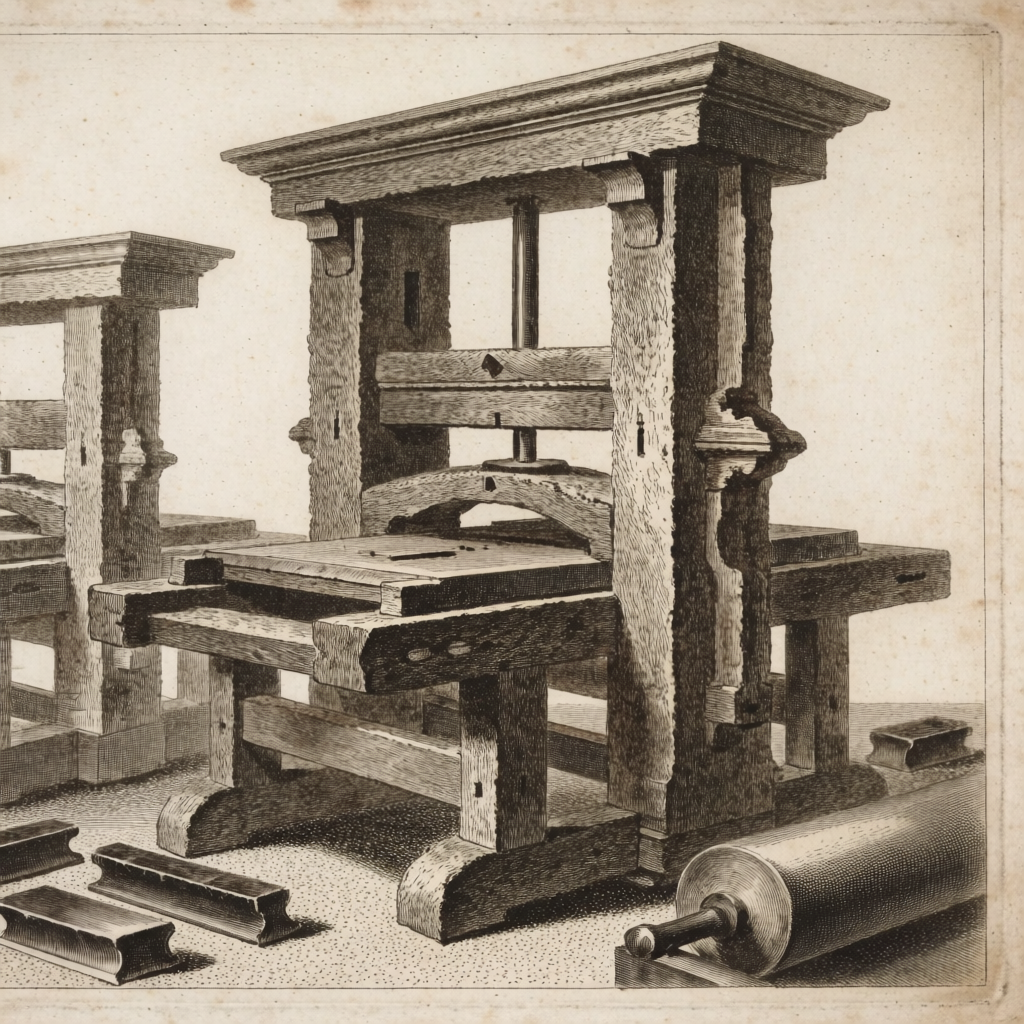
The Frame
Two cheeks of well-seasoned oak, joined above by the cap and below by the winter; the head, mortised between them, carries the wooden nut. Six feet and more of it — and in many shops the cheeks were run up into the ceiling joists, so that the press could not walk.
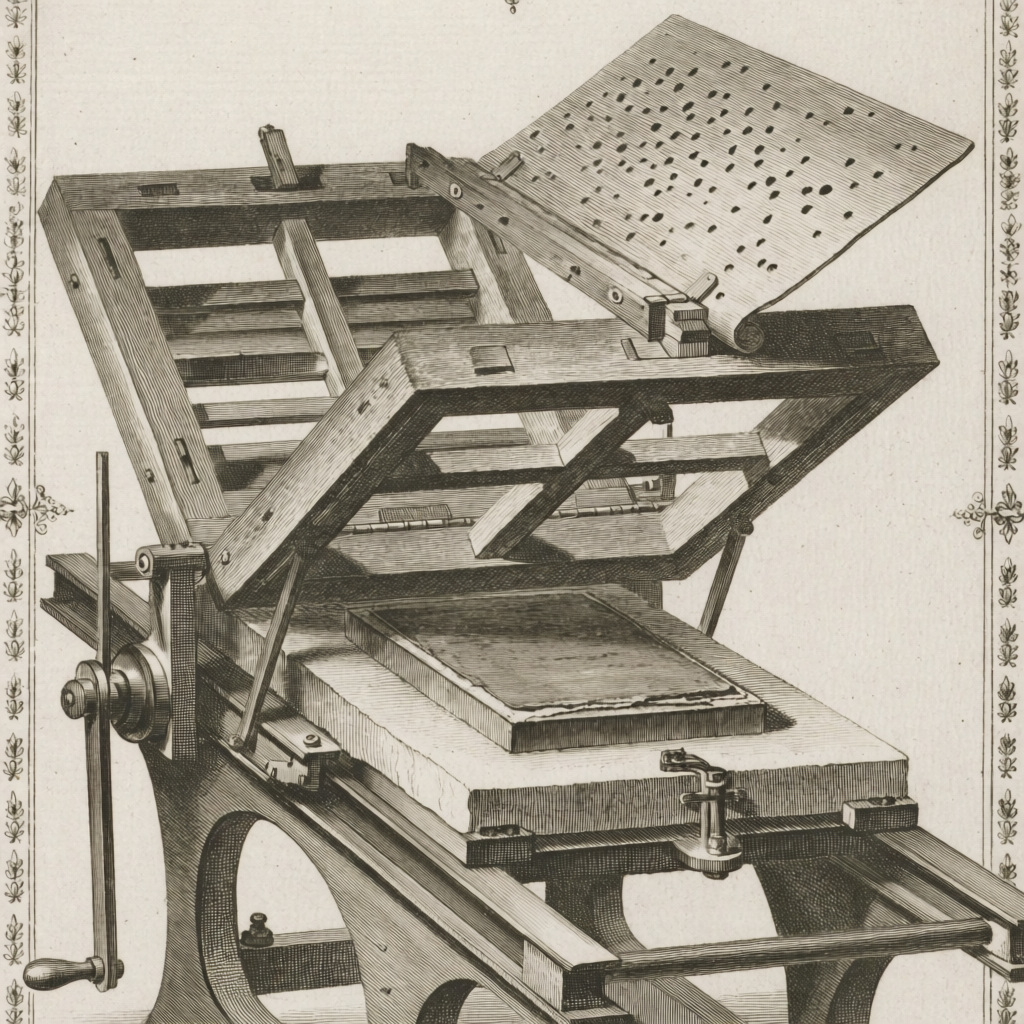
The Carriage
The sliding plank and its stone coffin, holding the locked forme of type. Hinged to it the tympan, which holds the dampened paper on its points; over that the frisket, cut away to shield the margins from stray ink. Wind the rounce and the whole bed rolls under the platen.
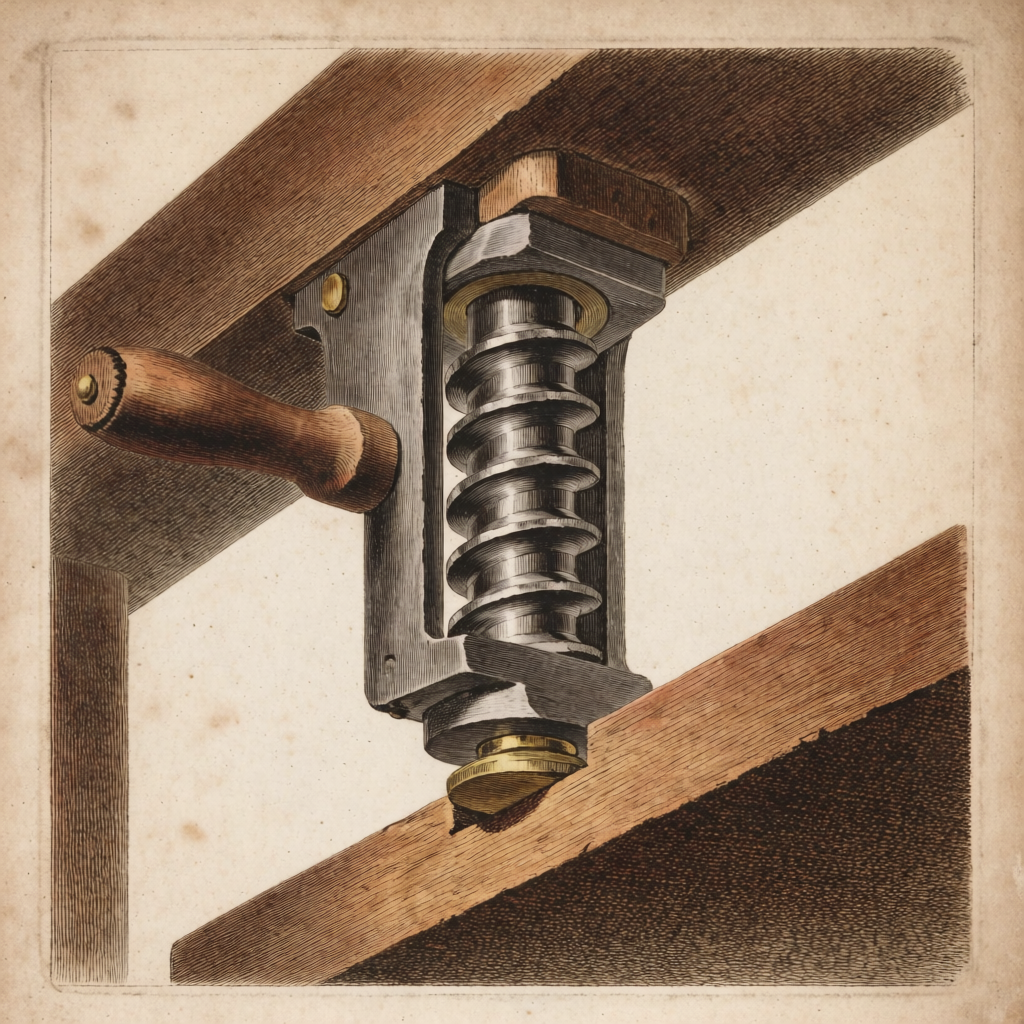
The Screw
A screw of three worms cut on the iron spindle, turning in the nut of the head; the hose below keeps the platen from twisting, and the bar with its wooden handle sits in the eye. One pull impresses half the forme — hence the two-pull press: two men, two pulls, some two hundred and forty sheets in an hour.
The three slots, then, are not on the press. They are the three ways it holds something: a frame that holds the whole, a bed that holds the type and the paper, a screw that holds the page down just long enough to mark it. Three members, three openings, one impression.